South Korea’s effort to recruit elderly care workers through a dedicated visa has so far yielded limited results, with only a fraction of the annual quota being filled, a lawmaker said.
This comes as the government prepares for a surge in demand for long-term care as the population ages and more older people require professional assistance with daily activities.
However, as the government explores other ways to recruit and retain care workers, experts warn that staff shortages could persist without better working conditions.
Foreign care workers fall short of target
According to Rep. Ahn Cheol-soo of the People Power Party on Wednesday, only 41 foreign nationals had received the E-7-2 visa, which allows graduates of Korean colleges and universities to work as care workers at residential elderly care facilities if they have an associate degree or higher, a caregiver certificate and Korean-language proficiency of at least Level 3.
Introduced in July 2024 as a pilot program to help meet rising demand for eldercare, the visa has an annual quota of 400. No visas were issued in 2024, while 18 were issued in 2025 and another 23 from January through September this year.
All 41 visa holders remained at the facilities where they initially took jobs, and 11 had received permission to extend their stay, according to the data.
The visa restricts holders to residential care facilities and does not allow them to work for home-visit care providers, a limitation Ahn said could make the jobs less attractive.
At the end of 2025, 7,623 foreign care workers were recorded as working at long-term care institutions. Of those, 5,425 worked for home-visit providers and 2,439 at residential facilities; 241 worked in both types of institutions.
Separately, 71.3 percent of foreign nationals holding caregiver qualifications — 18,973 out of 26,596 — had no recorded employment status or workplace, according to the data. Some facilities have reportedly turned away prospective residents because of staff shortages.
Robots and young Koreans emerge as alternatives
The limited response to the government’s foreign recruitment program has prompted policymakers to explore other ways to address care worker shortages, including training robots and young Koreans to support the use of care technology.
As demanding working conditions are often cited as a reason for the lack of applicants for facility-based positions, many care facilities have expressed interest in adopting robots for tasks including exercise assistance, toileting, communication and mobility support.
In a 2025 survey of 330 care facilities with a capacity of at least 80 residents, 89.1 percent said they saw a need to introduce care robots, while 51.8 percent said they would consider adopting them if financial support were available.
Only 6.4 percent said they had introduced the robots, according to the Korea Development Institute.
The government has also incorporated robotics into its longer-term strategy for addressing the country’s care needs.
On Oct. 14, the Presidential Committee on Ageing Society and Population Policy presented a plan to train 100,000 young people to work with robotics and artificial intelligence in eldercare.
The plan calls for deploying them in depopulating areas from 2028, though details of the training and employment arrangements have yet to be finalized.
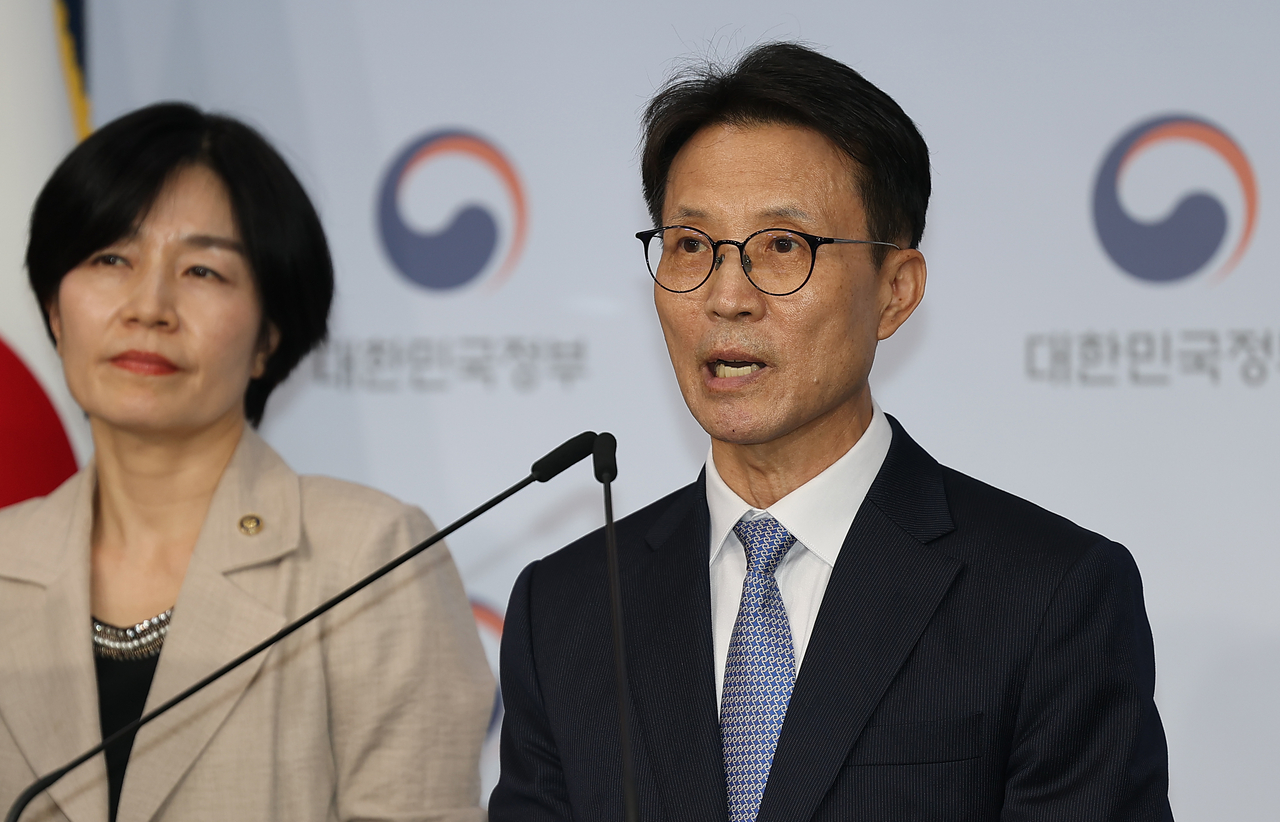
“Young people will be trained to help care workers become familiar with the technology and ensure that smart homes and smart facilities equipped with AI become established in the field,” Hyun Soo-yeop, the first vice minister of health and welfare, said during the announcement.
“The goal is to connect care with technology by drawing on young people’s digital skills. They are expected to be deployed after training and pilot programs will conclude in 2028.”
Better working conditions remain essential
Experts caution, however, that neither foreign recruitment nor technology is likely to fully address the shortage without improvements in working conditions at residential care facilities.
The KDI estimates that an additional 990,000 care workers will be needed by 2043 to maintain the 2023 level of workload per worker.
The KDI cited a 2018 projection by Japan’s Ministry of Economy, Trade and Industry that introducing information technology and related equipment could reduce demand for eldercare workers in Japan by up to 17 percent by improving productivity.
However, the KDI’s 2026 report also noted that demand for care workers would increase as expectations for the quality of care services rise.
Meanwhile, experts say low pay and limited social recognition make care work unattractive to potential workers, even as demand rises.
The presidential committee estimates that annual salaries for care workers range from 24 million won to 35 million won ($18,000-$26,000), compared with a median annual wage of 34.17 million won recorded for Korean workers in 2024.
“Under the previous administration, foreign workers were expected to fill care jobs. Now it seems young Koreans are being positioned to do the same,” Cho Hyuk-jin, a research fellow at the Korea Labor Institute, told local media.
“If jobs in other industries offer better pay and greater social recognition as AI-related industries expand, young people will have little reason to enter the care sector.”
forestjs@heraldcorp.com